
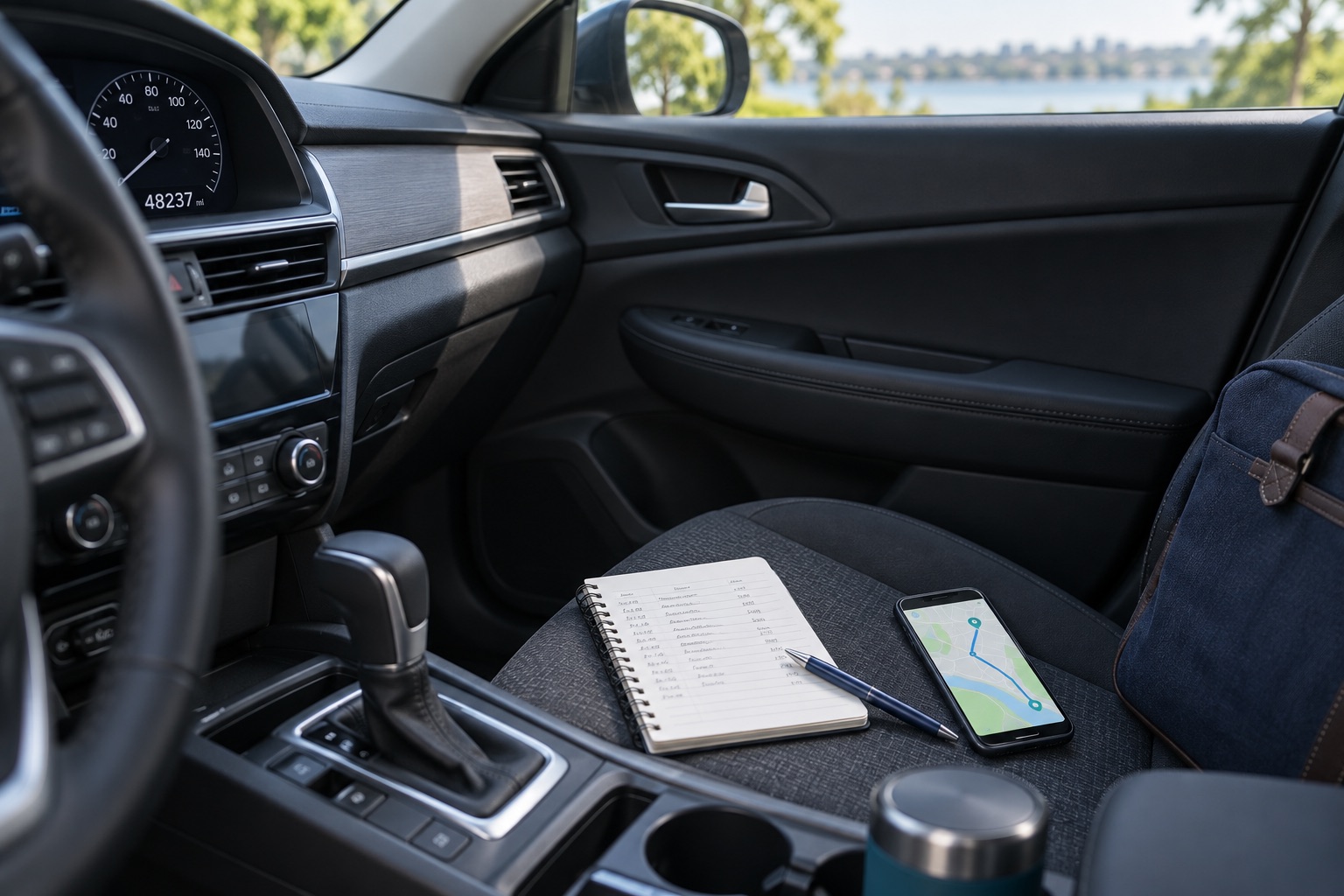
A vehicle used for both business and personal driving needs a supportable split. A calendar can help reconstruct appointments, but a contemporaneous mileage log is stronger. Publication 463 explains the records needed for car expenses and why ordinary commuting generally differs from business travel.
Capture each business trip
For each trip, record the date, destination, business purpose, and miles. Keep the odometer reading at the start and end of the year, plus records of total annual miles. Receipts for parking and tolls should be kept separately when relevant. A vague “client visits” total entered in December leaves important questions unanswered.
Understand the two common methods
The standard mileage method applies an IRS rate to eligible business miles, subject to method and vehicle-use rules. The actual-expense method allocates eligible operating costs and may involve depreciation. Your first-year choice can limit later options, and leased vehicles have additional restrictions; choose a method with the full facts rather than assuming that one always saves more.
Watch the commuting boundary
Driving from home to a regular workplace is generally commuting, even if calls are taken in the car. Trips between business locations may be different. A qualifying home office can change how some trips from home are treated. Review unusual patterns with your accountant before claiming them.
Read more from the IRS
This article provides general educational information, not advice for a particular tax, accounting, legal, or investment situation. Rules and forms can change; review your facts with a qualified professional.